Tuesday, June 25, 2019

Screenplay - First 10 pages


Over Titles:
ANIMATION:
A blue heart forms on a white screen and beats

MALE VOICE
I have heard that Love is beautiful

A pink heart forms on the screen and starts beating next to the blue heart
                                                                   
                                                                   MALE VOICE
That Love is the best feeling ever

The hearts form into full human figures with a setting of their respective houses around them.

MALE VOICE (CONT’D)
But I have never known it

They are both staring out of their balconies into the sky.Two stars blink and HE sees a beautiful hair blowing in the wind, with her face unclear.

MALE VOICE (CONT’D)
Does an unknown voice call you from
the stars?

The other blinking star has a male hand covered in suit, opening his palm to hand her ‘the moon’. SHE smiles.
MALE VOICE (CONT’D)
I don’t understand
They turn away from their respective windows and smile imagining their dreams.

MALE VOICE (CONT’D)
What is love, really?

A bus stop forms and SHE walks towards it, while he is already standing, with two-three people around. A sudden shower hits and drenches her, she quickly takes refuge in the bus stop and tries drying her dupatta. He is dumbstruck at that action. He looks at the water trickling down her lips. A
bus suddenly screeches to a halt and the few people around rush into it. She is pushed aside by them and is about tofall when he holds her. She suddenly looks up at him, starry-eyed. Their eyes lock.

MALE VOICE (CONT’D)
Ahh! So this is love. Rain makes
love happen.
Titles end.

EXT. POOL SIDE RESTAURANT - EVENING
There seems to be an air of urgency in the pool-side restaurant of a plush hotel, located in the outskirts of the city. Gadgets, not usually belonging to this location are being fixed at a certain height from the ground. What the gadgets are is unclear, except that they have small wires jutting out of them, but are not visible to the human eye, unless one focuses closely on it. The camera widens to reveal the pool-side restaurant with a single table and two chairs adorned to perfection like one
witnesses in romantic novels; creepers with flowers, a semblance of breeze, masking the modern construction of the pool-side. KISHORE, 26 walks in adjusting a ear-piece and checks everything. He sees a young boy walking out from amongst the creepers.

VOICE
Did you get the rain machine?
A young worker around 19, looks at Kishore and shakes his head.

BOY
(confidently)
It’s off for a shoot

KISHORE
How can you do that? We pay you
double for getting that!

BOY
But it’s Shahrukh’s film
Kishore looks at him flabberghasted

KISHORE
(sarcastic)
Of course, your machine is the only
thing that makes the shoot happen!

BOY
Don’t worry, I have a storm fan.
The setting will be good.

Before any response can be heard, the boy walks out.
Kishore’s ear piece starts catching signals,

FEMALE VOICE 1
Clear set.
2.
Kishore, hurries “Everybody, field clear! Field clear!” A couple of men scurry out and Kishore goes and sits near a machine with ear-piece all adjusted. There is a small monitor in front of him. A young couple, NEETI SHAH, 25 and RAKSHIT SHETH, 27, take their seats in the chairs beautifully arranged as two waiters pull the chairs out for both of them. Neeti is dressed in a flowing orange gown and Rakshit in a formal attire with a blazer and no tie.

INT. CONTROL ROOM - EVENING
Camera pulls out into a CONTROL ROOM, revealing the same people in a two shot on a monitor.

NANDINI, 28
Picture perfect!

POOJA, 22, the intern scuttles around the ‘switching’ board. Neeti and Rakhsit look at each other, a little nervous, Rakshit more than Neeti and he turns his face.

NANDINI
Sound?

POOJA
That’s what I am trying to fix
Light footsteps are heard.

NANDINI
Make it quick, RAJAT is coming!

Pooja looks at her helplessly. Nandini panics as the footsteps head closer and goes under the table, a chord is hanging out.
POOJA
Sorry!

Nandini fixes it
NANDINI
How many times..

The door opens letting in a bit of light in the dark control room. Two legs in beige cotton pants and dark brown shoes walk in towards the monitors.

3.
RAJAT
Haven’t I told you to not
disconnect the audio cable from the
mains?
Rajat Doshi, 29 takes his seat at the centre, and moves himself towards the control board. Pooja looks down sheepishly. Rajat smiles at Nandini and then raises his eyebrows at Pooja. He immediately focuses on the monitor. Beat. Rajat has a contented look on his face and he very casually switches the images on the monitor to a CU of Neeti, then to Rakshit and a two-shot. He puts on his ear-phones,
turns on the ‘mic’ button. Nandini and Pooja too put on their ear-phones.

RAJAT (CONT’D)
All set?

KISHORE (O.S.)
Yes

RAJAT
Great! Let’s go!

EXT. RESTAURANT - EVENING
Meanwhile, the waiter serves them a mango drink. Neeti, sort of moves back and forth in her chair, restless. Rakshit, drinks water and smiles a little as he puts the glass down. Neeti turns away for a second twitching her fingers as if preparing to ask something and as she turns, Rakshit gulps
down the glass of water, nervous. He sighs in relief as Neeti turns towards him only after he puts the glass down.
NEETI
(catching the sigh)
What happened?

RAKSHIT
(shaking his head)
Nothing

NEETI
Oh, I thought...(pauses) Is this
your first time?

RAKSHIT
Yes, first time with a girl
Neeti looks a little surprised.

4.
NEETI
Oh, (shocked) I meant... if this is
your first matrimonial meeting.
Rakshit, a little embarrassed
RAKSHIT
Oh...


He looks at the mango juice on the table and leans towards it.
NEETI
So you are into some speech
technology something?

Rakshit nods.
NEETI (CONT’D)
(a little restless)
Is that why you don’t speak much?

INT. CONTROL ROOM - EVENING
Nandini looks at Rajat tense. Rajat still is calm. On the monitor, Rakshit just smiles, unable to respond. Neeti looks at him and looks beyond him.
RAJAT
Now!

INTERCUT

EXT. SIDE HIDDEN FROM THE POOL -EVENING
Kishore moves a button

EXT. POOL SIDE RESTAURANT - EVENING
Red rose petals suddenly shower on the couple. Neeti looks up and smiles. Rakshit too looks up and eases a bit. At the same time a fan starts from behind the bushes, Neeti’s hair blows towards her right side.
RAJAT (V.O.)
Decrease...

Suddenly the blow of the fan is softer and Neeti looks beautiful with the sun about to set. Rakshit looks at her with a slight smile on his face. Her stole flies away and Rakshit catches it in time to give it to her.

5.
As she takes it, their fingers touch. She looks a little shy when he looks at her absorbed, as he sits down.
NEETI
(her tone softer)
It looks like you don’t speak much

RAKSHIT
(smiles, softer, looks at
her hair)
Yeah, I haven’t really spoken to
girls.

They both smile at each other and lean closer, take their juices and look at each other. Red hearts fly from between them.

INT. CONTROL ROOM - EVENING
On Screen: They are both drinking from the same glass! Rajat looks at Nandini and winks victoriously. Nandini gesticulates, “As always!” Rajat’s phone rings and he walks out into the PORCH.

EXT. PORCH - EVENING
An air of confidence on his face suggests that he has been doing this job successfully for a while. As if a habit, he lights a cigarette with a Zippo and talks at regular intervals.

MR. SHAH (V.O.)
Thank you, Rajat, Thank you! You
did the impossible! My daughter
likes Rakshit!

RAJAT
Ah, that’s alright, I just did my
job.

MR. SHAH
I shall send you the invitation
card soon.

RAJAT
Thank you. Shall look forward to
it.

Rajat hangs up the phone, victoriously. He flicks out the end of the butt and squishes it under his foot and walks in. He places each step surely and soundly. The spark in his eyes reveal that he is about to get everything in this world.

INT. HEAVENLY MATRIMONY OFFICE - SAME DAY
As he walks in, the office, now bright with his smile, reveals a series of photographs of couples in their respective marriage attires with the watermark of “Heavenly Matrimony.com” clearly etched on it.
POOJA
(excitedly)
Did they agree?

Rajat nods, smiling.
RAJAT
Let’s look at the next set.

Kishore walks in right then and smiles at Rajat. The lights suddenly dim and Nandini pulls up a couple of ‘heavy’ men and women on the screen.
NANDINI
Smitha nair and Akshat Patel - they
have to be marriage ready.
Pooja jots down on her note pad.
KISHORE
(peeps in, whispers)
Category is weight loss.

RAJAT
(looks at Kishore)
They are?

KISHORE
Gold
(to pooja)
So only 10 kgs

KALYAN BANERJEE, 33, walks in a kurta and jeans and quickly joins them. Nandini draws up more pictures of fair and dark boys and girls on screen
KISHORE (CONT’D)
(to Pooja)
Whitening and Tanning, Platinum
Pooja jots down. The screen keeps switching pictures and we pull out to hear.

RAJAT
So we have 4 sets ready to meet.
Kalyan, only 1 Bronze here.

Kalyan nods and we move away from their discussion.

INT. KANGNA’S ROOM - NIGHT
The door opens softly to reveal a brightly-lit, messy room covered by papers with designs of wheels and car doors. SUDHA, 55, Kangna’s mother tip toes into the room, in her night gown, looking for Kangna. KANGNA, 30, lies on the floor with a pencil in her hand, as if she fell asleep while
sketching. The sketch of the car door lying under her extended hand looks half complete. The room is replete with toy cars and models of cars. Her diploma in design is framed and hung on the wall.
Sudha wakes her daughter up.
SUDHA
Kutty, K.. (loudly) Kangna!
Kangna wakes up with a start and sits up in her pajamas and tshirt and stares at her mother as if she has never seen her before.
SUDHA (CONT’D)
Can you sleep on the bed and not
make me do this everyday?

She starts picking up Kangna’s designs on the floor.
KANGNA
(sounding sleepy)
Tch! I was thinking of a design..
And it was right there, at the tip
and you woke me up!

SUDHA
(giving her a hand to get
up)
Yeah that’s what you say everyday!

KANGNA
But that’s the truth!

And she lies on her bed. Sudha collects all her sketches and puts them on her study table in the room and turns off the lights.
KANGNA (CONT’D)
Thanks ma! (mutters Kangna)

Hearing that, Sudha smiles and fondly shakes her head, walking out of the room, and comes right back in.
SUDHA
Tomorrow we are going to the
matrimony office at 9

And walks out again. Kangna pulls her blanket on her as if to avoid every word.

INT. RAJAT’S CABIN - DAY
Kangna, very disinterestedly sits, next to her father, shaking her legs vigorously. She looks around for some magazines, but none her kind. She then adjusts her long curls and pins it up into a half-pony. Her yellow cotton shirt reveals her almost pristine neck with a thin gold chain around it. Her father and mother peer into photo albums while the chair in front stays empty. She gets up and walks around
to check the room, its furniture and so on. The shelf particularly looks interesting to her, the way it is carved, almost like the seat of a car.

NARAYAN, 58, tries hard to see the photos through his glasses. Sudha, his wife, shot-lists photos by writing down the numbers next to them.
NARAYAN
They all look fine to me.
Sudha nods.
SUDHA
Kangna, come here and see these!

Kangna looks at her reluctantly and walks towards her. Narayan places the photos in front of her. They swirl around her head like a cinematograph, confusing her. And she plonks on the sofa next to them.
NARAYAN
This one is not like the last two
agencies. I have heard good reviews
about it. They don’t have a single
failure, all their clients are
married.

SUDHA
You have to get married!

KANGNA
(a little exasperated, but
tries to be calm)
I never said I won’t, but you don’t
get it when I say I won’t find
anyone in such places.

SUDHA
(cutting her off)
We saw the two you chose, didn’t
we?

KANGNA
Ma, please that was almost

She stops mid-sentence when Rajat opens the door and stares at her on the couch in her blue jeans and yellow shirt, hair carelessly bound in a half-pony, a longish, chubby face with her lips parted. He immediately comes back to his senses and shakes hands with Narayan.
RAJAT
Hello Mr. Narayan. (Shakes hands).
That...must be your daughter?

NARAYAN
Yes, yes..

Before he can finish, Kangna gets up to shake hands with him.

KANGNA
Hi, I am Kangna.
Rajat, a little surprised, responds with a hand shake. He moves over to take his seat. She sits down on a chair opposite him, next to her parents, almost as if studying him.

Hari - Published in Muse India - a literary journal


Megha Subramanian – ‘Hari’ 


I sat in the confines of a vast space surrounded by airy windows. I stared around at the enormous swarm of people muttering loudly. It was my younger brother’s wedding. My aunts and uncles and my cousins were excited. I sat still at the center table staring at ten photographs that swirled like a cinematograph around my head. The clamour wouldn’t stop.

Little Lalitha fell on my lap singing “my desi girl,” a song from one of the recent Hindi films. She stopped the swirl of pictures in my head as I lifted her six year-old light body to enable her to stand. She was giggling as it was fun for her to fall on people’s laps. It was probably one of her games to grab attention. I guess my thoughts had been ignoring her for too long, this thought of choosing a life-long mate from amongst these pictures. This Ravana had more than ten heads with different faces that popped in and out of my face as my hands ran through the pictures laid out in front of me. Lalitha was up to another prank with my hair and I pushed her away. Startled, a tear was about to roll down her eye, when I felt bad and smiled and gave her a peck on her cheek. “Sorry, Lalu.” She ran away, satisfied to join other kids playing in the living room. I escaped into the balcony from the constant mutter of silk sarees and ornaments.

Amma soon followed me with a plate of idlis. “Why are you standing here alone? Kanna mama and everyone is waiting to talk to you.” As I turned to look at her, she caught the despair in my eyes. “Sushila kondhai, there is no hurry, take your time. You don’t like any of those boys in the photos? Don’t worry, we can ask for another set.” I nodded. Amma fondly touched my cheek and went away. I swallowed a morsel of idli, wondering why I need to eat.

The door bell rang. “Hari anna” cried Lalitha. Hari! I was about to run out of the balcony and I stopped. I shouldn’t make it obvious. Will he ask about me? Will he come here to meet me? I waited. I felt him smile and his finger fondly touching little Lalitha’s cheek. “Pradeep, congrats yaar, time is nearing!” he teased my younger brother in his usual jovial tone. His voice rang in my ears. He sat on the sofa right behind the glass door of the balcony. His red-striped shirt suited his fair complexion. He had light stubble, just the way I liked his face. He smiled revealing his beautifully set teeth. He took a piece of mysorepak offered to him and gently bit into it…

…he wouldn’t stop, his lips all around my neck, his teeth piercing into my lips. He held me in his arms, my legs on his and smothered me with kisses. As the driver drove around Churchgate, we snuggled at the back of his car. “Don’t leave me”, he whispered softly into my ears. I pulled away from the closeness of his face to clearly look at his eyes. I peered into them through his glasses. He meant those words. The car went on and so did we. Soon we were beneath my house but he refused to let me go like there would be no other meeting again. He instructed the driver to continue driving. It was two a.m. “Hari”, I covered his mouth with my palm, “I have to go now. Can we meet again tomorrow?” He agreed. I got off from the car. “Call me after you reach home? I asked after I entered the gate. “Come online” He said. “But call me, won’t you?” He nodded.

I couldn’t recognize the door to my house anymore. I tip-toed into my house, carefully so as to not wake up my mother. Stars shimmered on my blanket as I lay beneath it thinking carefully about every detail that had passed between us in the last few hours. I knew the way he held his cigarette; I knew how he stood with slight slouch of his back. I knew how he held his glass filled with alcohol, just three fingers, the ring, middle and thumb. He would take a puff after two sips of his drink. Under those flickering lights and loud music I remembered Cummings. I pulled him close and whispered, “Have you read ‘Somewhere I have never traveled?” He shook his head. I want to recite that to you. “Sure”, he said as he put his arm around me. I stared. I didn’t expect that so soon. But I didn’t want to take his arm off. I swayed in the darkness as I watched every move of his, trying not to miss a footstep. Hari, what was it like when you went to school for the first time? Hari, what do you fear? Hari, what pains you, what makes you happy? What do you want Hari? What is it? I wanted to know all this and more. I want to ease your pain, cure your hurt, see you laugh, conquer your fears, and give you all you want. I do not know why I felt that. Now I lay under my blanket thinking how I never asked him anything, I never recited Cummings.

“Oh my God, was I not supposed to go online?” I turned on my lap top. He was online. “You didn’t call me” I typed. “I didn’t say I would, I asked you to come online.” “Yes”, I said. “Hari, I have been close to only other guy before you.” “Really?” he asked. I wanted to see his eyes, his eyebrows as he said this. “What about you?” I asked. “I shall tell you tomorrow” He said and we went off to sleep.I was in his arms as we went around the moon and flowers showered on us.
The beeps of my cell phone woke me up. It was ten am. I checked to read Hari’s name. I was wondering when we would meet today and opened the message. “Things are moving too fast for me. I don’t want to start anything that will hurt either of us” It read. I was startled. I called. No reply. I called him again. No reply. I was leaving for the US in a week to complete my degree that I had begun almost a year ago. I thought I had found someone for a lifetime but here he was running away from me. No Hari, don’t do this. You said yesterday that I shouldn’t leave you and now you are?

That was five months back and here I was still thinking of that one night. I had barely met him thrice and the third time I was swept away. Till then he was one of many guys I met as a friend. After the first meeting I felt I had known him forever. The second just made the feeling stronger and the third seemed to affirm it. “I do not know what it is about you that closes and opens, only something in me understands that the color of your eyes is deeper than all roses” I shut the book of verses.

…I now stand here watching him, from behind the glass door, this guy who never replied to any of my emails. “What am I doing God?” I wondered. Do I have to choose between some guys, when I all I can see is Hari? “Sushila, what are you doing there? Come here”, called Pradeep. He broke into my thoughts. Did Pradeep catch me watching Hari? Hari did not turn his head to look at me even then. I sheepishly dragged myself into the room. “Hi Hari”, I greeted. “Hi”, he responded. He asked about my studies and my research work. No sign of any past in his eyes, no acknowledgement. It was probably the crowd I thought. He checked his blackberry and smiled at something. Who is it? I wanted to ask. Who, Hari who?

…I spotted him on Pradeep’s Facebook account. Hari’s profile message said, “Mind and eyes are blank!” I had felt that many times. Who is this guy who feels the same I wondered. I figured from my mother that Hari was a distant relative whom I had never seen in all these years. Apparently he and Pradeep played tennis together. How come I never saw him? I messaged him on his page, “Hello, my distant relative!” That started it all. His love for books, just like mine. We read the same kind of books. We exchanged books. I introduced him to Marquez. I gave him “Of love and other demons”, my favorite book.

“Sushila”, called Shyam mama, “So which one of these guys do you like?” I looked at Hari who was still messaging someone from his blackberry. He had not even heard the question. Shyam mama picked up a picture and thrust it into my hands. “What do you think of this guy?” He asked. He invited Hari’s response. Hari looked around confused. “Oh we are looking for a groom for Sushila”, added Kanna mama. He said, “nice,” without looking at the picture. He got up suddenly and announced, “mami”, he called my mom, “I got to leave now, bye, Pradeep.” He looked at me and waved. I caught his eyes for a second. So many questions I have Hari, so many. Do you remember that night hari, do you? I got attached then. Do you think I am stupid? He broke our glance. He left. I sat there in the midst of that crowd with a picture in my hands. Everyone seemed to like the guy. My uncles were asking my mother to proceed with this match.

I left them and ran into the balcony, yet again. “Lalitha, laitha”, I could hear my cousin call her daughter. “Come dance” she said, “you have to dance at the wedding tomorrow, don’t you?” She turned on the CD player. MLV’s “Krishna nee begane baro”, rang through the house, “Begane baro, mukhavanne koro..” . I watched Hari get into his car and leave.

The Flight -Published in Muse India - a literary journal


Megha Subramanian – ‘The Flight’ 


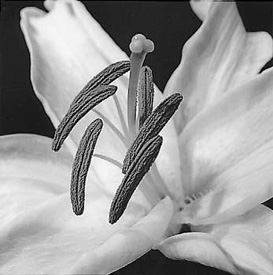
Tiger Lily. Photo by Michael Dubiner.


Short Fiction
The Flight
Deep moans emanate from the abandoned building in the north-west corner of the 'Societal Concerns General Hospital'. Raudra stops here every evening as he passes by wondering, "Whose moans are these that sound so familiar?" Raudra Arya, a resident at the hospital, a student of neurology, concerns himself with everything that touches his heart. Today he stops and stares for longer than usual because the moans are intercepted by laughter. The laughter has a strange ringing voice that invites him into something, that something inexplicable. For days he could not figure out from which room of the building this voice came from, but today it seemed really close. A stealthy glance around, and Raudra decides to go closer to the building than usual.

As his steps move closer the laughter stops, deep breaths are heard as if someone has energy that has been forced to remain latent. Raudra feels the breath. His hand touches the wall. He hears the other hand touch the wall. He takes off his hand and then slaps the wall with the other. The person behind the wall responds…the same rhythm, the same lag in time, the same beat, they make music. Startled, Raudra presses his ear against the wall and asks, "Who are you?" There is no reply. Then suddenly a burst of tears, a cry that hurts Raudra. He has never heard anyone cry like that before. "Stop!" he shouts, "Don't cry, don't every cry, I shall take you out of here." The cries stop. Raudra touches the wall as if pacifying the person on the other side. He resolves to do something about it. He walks away.

Sabina Maria feels great relief for the first time in ten years, as if someone had actually heard her. She looks at the scaled hands and feet and slowly touches her forearm. "Aahh", she bleeds her skin unknowingly with her overgrown nails due to her inability to control her movement. The room away from light, has a smell of dead rats that Maria bears, covered with puke due to her inability to bear the smell. The only time she sees any light is when the warden, Sitara Devi, gets her food. Sitara Devi opens the door with utmost care, just keeping it at a twenty degree angle from the wall, wide enough to let a plate in sideways, spilling half the food on the floor, which Ram Ashraya cleans once in fifteen days.

She hasn't had a bath in two months she thinks and looks at her brown, infested skin, and her partially bleeding wrists, as a result of the shackles that chain her to the wall allowing only enough movement to go closer to the door. A small crack at the corner of the wall allows her to see the shoe flower or its leaves depending on how the plant chooses to move itself. The glimpse of it brings such a bright spark in her eye and the urge to touch it, makes her forget the chains which again causes intense bleeding of her limbs. Sabina Maria, distressed, moans and moans, but nobody seems to hear. All of twenty-seven, Maria looks as if ready to go back into the foetal position.

As the wind touches his skin, Raudra imagines the hands behind the wall. He hears the sound of that ringing laughter, so full of life, as if it will devour every beauty in nature. That rhythm, that haunting moan - Raudra shuts his ears as if to block everything, his thoughts, his memories. "Stop!" he screams.

He walks into a building to go for his night-rounds. Did I mean it when I said that I would get that person out? Can I? He wonders. But who is it? Salim, almost 60, chews tobacco as he stands leaning his lean body against a stretcher. "Salaam sahib" he waves his hand as Raudra passes by. The gnawing slips his tongue as Raudra responds to Salim, "Who lives in the north-west building, that abandoned one?" "Sabahnah Maiya" he mispronounces due to his tobacco-ridden mouth. He spits into a pot close by and says, "Woh paagal, that crazy woman, Sitara Devi visits her daily, woh kaat thi hai (she bites)."

Raudra walks away as he acknowledges Salim's comments. She, who has that ringing laughter cannot bite, he thinks. After his rounds, he walks into his father's office, Krishna Arya, the head of the department of psychiatry and a leading voice in the management committee of the hospital. Dr Krishna Arya sits in his tall chair going through one of his patient's files. Raudra interrupts him expecting a really angry reaction from his father. "How many times have I told you to knock at the door?" he asks Raudra. He instantly apologises and releases his question, "Who is Sabina Maria? What is her case all about?" He sees his father's expression change into a semblance of fear and also regains its stoic mask as his father collects himself. "Why do you care?" he asks Raudra. "Well, I want to know why someone is locked up like a prisoner in the north-west corner of this hospital," his voice softens as the sentence progresses and as he sees his father's face adopt anger. "That woman is a menace. After all the sessions and a couple of shocks, she still wants to fly. Nothing can cure her. The mental hospital won't take her because she was registered at first as a case of psychological disorder." 

"She wants to fly?" smiles Raudra. "But that is an innocuous wish, how is that a menace?" "Don't talk like an idiot Raudra, humans don't fly. She made some wings and went to the terrace of a sky-scraper ten years ago, to fly! Her parents managed to capture her and bring her here. At first they thought these were mere flights of fantasy, but then they realized how serious she was when they saw the wings!" "Wings, where are they?" asks Raudra. "I am not sure. I think her parents have them," Dr Krishna responds.

"Why does she have to be locked up?" Raudra expresses his concern. "Well, because we can't have people in this society with wings. They can then go anywhere, and that is not possible", Dr Krishna says as a matter of fact. "But where does she want to go?" Raudra asks, more curious now. "Well, I never asked her," his father responds, "and what does it matter, she is mentally unstable, with a stupid want of flying!" "Can I get access into that room? I want to cure her," offers Raudra. "What? You must be crazy. We have all given up." "No, just this one time, I want to see this person who wants to fly," pleads Raudra. "Well, come to me when you become insane and give up," he hands Raudra the keys in arrogance.

All through dinner, Raudra keeps thinking of his childhood wish to fly. "Ma," he calls out to Sumathy, "Do you remember that I wanted to fly?" Sumathy, barely lifting her head from one of the political dailies, nods her head. "Was I six or seven then? When I threw a tantrum to fly and you locked me up?" Sumathy finally aroused by the accusation, lifts her head and says, "Seven. You were so stubborn about wanting to fly. We took you in an aeroplane the next day but you still continued to cry. You said, "I want to fly, not like this, inside this box!" and then we locked you up, till you regained your senses!" "Ma, but why did you lock me up? Why did you not help me fly?" he asks. Sumathy appalled, "Are you crazy? Humans don't fly. How can you defy gravity?" "They have locked up Sabina Maria, she wants to fly," he tells his mother. "Yes, she tried to fly. So they had to lock her up," she responds. As Raudra eats Sumathy notices a determination on his face that scares her.

Jacob and Kalisthia Maria sit on their porch in the outskirts of the city, sipping tea, as Raudra opens their gate. They are surprised by a visitor at this hour as it is very uncommon for someone to visit their home after the mishap with their daughter. The neighbors have ostracized them and so has the Church due to the strange ways of their daughter. Kalisthia, excited to see someone enter their house shouts out loudly, "Welcome, welcome. Will you have some tea?" Raudra looks at the pudgy woman with a soft face running towards him. 

Their roof seems to be falling and the man sitting in the chair seems to be holding his tears, thinks Raudra. He accepts their invitation to tea. Slightly nervous, he asks, "Where are the wings?" Jacob violently gets up from his chair, "Get out! I do not want to talk about the woman who brought misery to this house. She killed us too many years ago. And we have burnt her wings. So just leave!" Raudra jumps out of his chair and manages to say, "She is your daughter. Do you not want to see how she is?" Kalisthia sternly responds, "Gentleman, I don't know who you are, but she only causes misery, she will destroy you, I, as her mother, am telling you this. See our poverty, she is the cause. Leave her alone, you will do yourself some good."

As the key opens the door, Maria wakes up. She looks towards the door and waits for the food to fall, but it doesn't. The door opens and someone enters. She screams at the sight. Raudra closes his nose and mouth to protect himself from the stench and sees a woman lying down in filth and a gown on her as if hanging on a corpse. "Sitara Devi", He shouts, "How can you let someone live like this? Clean this room, right now. Bathe her, right now. I want this done in the next few hours." Maria looks at his calm face, his eyes, an eagerness in them, just like in hers. She laughs. Raudra freezes. He has finally seen the person with that laughter. Tears run down seeing the corpse-like figure and he turns away.

Sitara Devi and Ram Ashraya, take her out of the shackles and drop a bucket of water on her and leave her locked in the bathroom while they concentrate on cleaning the floor. Maria freezes and cries as water touches her wounds. Unable to sit due to the sting of water she walks around in frenzy as if being nailed each second.

Raudra realizing the callousness of his helpers takes on the task himself. He carries a bag of medicines and oils to soothe her wounds and opens the door. Maria stops crying as she sees Raudra enter. He wipes her tears and as his hand touches her face a storm of familiarity binds them. As the oils run on her, the wounds cringe, but Maria doesn't, they soothe her innards and she holds the hand that cleans her wounds. Raudra looks up and smiles and gives her a peck on her forehead. I have seen life he thinks. With her new found body Maria walks out into the open with Raudra. She runs to the shoe flower plant to take a good look at it. Her feet fail her many a times but her will to see conquers it all. Raudra follows her and watches her as the plant brings a bright smile to her face. She covers her face from the harshness of the sun and slowly opens herself to its warmth. Raudra holds her and touches her unruly locks. Sabina Maria, for the first time experiences a known touch. Is that what is called God? She wonders.

"Come, let's fly," he whispers into her ears. Sabina Maria looks into his eyes. He speaks the truth she thinks. She involuntarily hugs him and lets out a cry as her wounds touch him but the wounds lose their effect as his bodily warmth heals them.

Sitara Devi reveals the presence of Maria in the exterior of the building. Dr Krishna Arya now aware of his son's insanity instructs the hospital to capture both of them. The entire hospital collectively decides to end their lives. "She is dangerous to the society and he who helps her is a greater danger to us. They should be killed before this spreads to our sons and daughters," they shout loudly. "What is it that spreads?" Salim wonders. But this is not the time to question; it is the time to support the majority. The hospital staff joins in and the word spreads like such a wild fire, that the entire town joins to watch the spectacle. Kalisthia and Jacob, happy to hear about their daughter's final destruction join the crowds. The crowds, now convinced of their integrity, don't seem to mind their presence.

As Raudra and Maria climb the stairs to reach the terrace, they hear screams, "Kill them! Punish them!" Maria overcome by fear of loss of Raudra hugs him tightly as if to hide him in her body. Raudra assures her of his safety and wonders why, why would someone who hardly knows him, want to protect him? Never have his parents done that. Why? Why her? And he lets her lead him. The cries grow louder and louder. Kalisthia laughs a blissful laugh that stings Maria's heart. Raudra holds her tightly, "We have to fly," he reminds her. They take their last step onto the open terrace and Maria spots a set of deep blue wings. 

Her laughter drowns the cries of the crowd. They pause in fear. But regain their senses as they see Raudra and Maria at the edge of the terrace preparing for their flight. They start throwing stones. Sumathy yells out, "Stop Raudra, stop! You will die!" The crowd prepares to drown the building in flames so as to destroy all evidences of this craze for flight. "Ma you are scared of flying. Humans can fly, they can. You just need to try!" The building lights up in flames as Raudra and Maria carefully place themselves on each other holding their wings. They leave just as the last flame is about to touch them, disappointing the crowd.

"Earth will kill them anyway," shouts a person in the crowd. But they fly folding their interlocked feet, their hands moving the wings finely balanced on their shoulders. Their complementing rhythms, helps the wind support them as a fountain from below that holds them up so high among the clouds that they disappear like birds in to their own world, the world of flight, the world of God, where everything is in your hands and where nothing is a sin. Sabina Maria and Raudra hold each other so tight that their blood merges into one, unable to distinguish between the two bodies. "Were they ever separate?" they wonder as they safely land on a cushion of grass. Hmm, the breath of air! And they laugh, laugh with the ringing sound of nature that echoes far away into the ears of the hospital, reminding those people that they are alive and that they achieved their dream, their flight!

The Little Vaamana - Published in an international Children's magazine - Balvihar

The little Vaamana!
by Megha Subramanian

“Hehehe” I giggled, looking at the little dwarf just like me, but he was dressed as a Brahmana. My Bharu akka’s dance teacher finally gave me a role in one of their dance productions as Vaamana because I was small like a dwarf, only six years old. Bharu akka’s teacher glared at me with the dance-stick in her hands, usually she went ‘tak, tak, tak’ with it on a wooden board, but for now I could read her thoughts of making it land on my feet.

I stopped giggling and looked all serious.“I told you raise your leg high in the air like this” and she showed me again, it looked huge when she took it above her head and landed it on the floor. “He covered the earth in his first step, in the second akash or the sky” and the third..I ran to take the place because I had to place the 3rd step on Bharu akka’s head, that was the best part of being Vaamana. Ask me why? Because at home she keeps going, “I am elder to you so call me akka, I am elder to you so do this for me..” and the list is never ending! This was my one chance to show her I am superior!

I walked into my room with a sense of pride, my facing upwards, unresponsive to Bharu akka’s calls, what pleasure! “Chinnu, chinnu”, amamma called. “Tch, amamma, I was feeling so big, you now spoiled it by calling me chinnu! What amamma!” Amamma laughed her toothless laugh, she looked really cute. I immediately hugged her. “Chinnu, you feel big on becoming Vaamana the dwarf?” She asked. “Guess how big Bharu akka must be feeling being Mahabali, who became the lord of the three worlds by replacing Indra?” I looked at her surprised.

“Then why did Vaamana put his last foot on his head?” I asked. “You feel ‘big’ on becoming Vaamana, like that Mahabali was also feeling ‘big’ on conquering the three worlds. Like you don’t listen to Bharu akka’s calls anymore, he probably stopped responding to Lord Vishnu’s calls,” She said. “But who can ignore Mahavishnu?” I asked. “That’s called pride,” said amamma, “You know pride, ’cos I saw you feel it sometime back..” I felt ashamed. “Sorry, Bharu akka”, I screamed from amamma’s room. “It’s okay you twit!” She screamed back. “Amamma, see her!” I complained. Amamma smiled, “If not you, who else will she tease?” That was also true, I thought.

So Mahavishnu attained this small, dwarf like stature to bring Mahabali back to realization, I understood. Imagine a great king, bowing down to a little figure like me. I looked into the mirror and held the posture, with mushthi hasta in both hands, signifying the umbrella and the kamandalam in a Brahmana’s hands. One can see that in the pictures of Vaamana roopa.

The next day, on the stage, in Madhyamavati raga, when the teacher sang,
“Kalita Vaamana roopa Kanditodhattha maha
Baligar vajala, suguna apala”
(You took the dwarf-like form to save the world
From the pride of Mahabali, now save me.)

The ‘sanchari’ (the enactment of the episode) began and I walked in, humble, just like Lord Vishnu would have, still aware that he and Mahabali are one. I was startled by the awareness. When I asked for alms and Mahabali promised me anything I asked for, a sense of affection emerged for him, then I thought, “You are such a nice king, if I only rid you off your pride, there will be none to surpass your piety” and I placed my last step on his head, guaranteeing him my protection for time immemorium, because that’s how long we will live. Everyone clapped after the performance and my eyes swelled with tears of realization, only amamma noticed and smiled.

The Invisible Balaram - Published in an international children's magazine - Balvihar

The Invisible Balaram

by Megha Subramanian
 
I had now become an official member of Bharu akka’s dance class; after I efficiently performed 
the role of Vamana, at least that’s what the teacher thought. So she allowed me to sit next to her 
and also permitted my questions. Strangely after the permission was granted I never had questions, 
I sat quietly, watching and thinking.
 
She sang in raag Darbar
“Sira samakrishtha sara hastinapura, ghora pralamba hara, baladeva shura” 
(You who fascinated the people of Hastinapura with your plough,
And protected Krishna from the asura Pralamba, please protect me as well.)
 
Bharu akka moved her hand like the plough and pulled it back in a stretch and then she killed the 
demon Pralamba. The teacher stopped her to correct her hand position. I wondered, “Who is Balarama? 
I only knew of him as the brother of Krishna. Amamma had once told me that Lord Vishnu put two 
strands of hair in Devaki’s womb, one white and one black; the black one turned out to be Krishna and
the white one, Balarama. But that’s all I knew about him.” Suddenly the class was over and Bharu akka
pulled me out of my thoughts, I was relieved, now I could get my answers from amamma!
 
“Amamma,” I went shouting, “Tell me about Balarama.” Amamma who was laughing, while reading 
an anecdote, looked up and said, “Come, come, how was class?” I nodded okay, and asked, “Other 
than being born with Krishna, what did Balarama do?” I placed myself on her lap, as if that was my 
rightful place and looked up at amamma. There was so much warmth; the familiar scent of shikakai 
in her hair, the vermillion on her forehead and her nine yards saree never failed to mesmerize me. 

Amamma as usual laid bare her wisdom and said, “He is known for fertility and strength. He was 
actually sent to protect Krishna. Lord Vishnu created him as a double to stay with Krishna all the 
time and he did. Balarama is Krishna’s strength and gave Krishna the confidence to fulfill his work 
on this earth. Out of the two, it was only Balarama who never took sides in the Kurukshetra war; he 
was equally there for both sides.” Amamma stopped with a wistful look in her eyes, as if she knew 
more than that, as if she had seen Balarama. 
 
“But why does Krishna need protection, he is God?” I asked. Amamma caressing my hair, said, “Gods
take birth to learn lessons, just like we do.”  Strangely amamma stopped giving me complete answers; 
she made me fill the dots and somehow always figured out when I found my answers. I just lay there 
on her lap, now listening to the funny anecdote she was reading in Malayalam Manorama. 
 
I never heard much about this avatar of Vishnu other than in passing with Krishna, almost as if he 
didn’t matter. When I stared at Krishna’s idol in my room, I smiled with the knowledge that god does 
everything through me, but is never visible; just as Balarama was to Krishna. I fell asleep peacefully 
knowing that god was, is and will be with me all the time but will not make himself or herself visible, 
definitely not as visible as I am!
 
The next morning, amamma woke me up, and I woke up smiling. She kissed me as if my secret had 
transpired to her in our dreams. I looked at Krishna, may be he did it and then corrected myself, no 
it was Balaram! 


Mosquito Steps - Published in an international children's magazine - Balvihar

Mosquito steps!
by Megha Subramanian
My mother told me not to go there alone, so you know what I did, I went there anyway! Actually it wasn’t far and my wings had developed yesterday. But you know how they say, the world is bad out there and obviously, I didn’t know the world, I was literally born yesterday!

My mother’s voice kept ringing in my ears; “Beware, don’t, don’t go, don’t..”  As I rose above the pink compound wall, I forgot all those words. It was beautiful, shrubs, grass, trees and lots of kids meant lots of food. There were many of my kind hovering around over their heads. I too decided to join them. Then I suddenly spotted three men with huge cylinders. Their faces were covered in some masks. I decided to go towards them to get my share of food. The men parted as I took my place on a brown collar. He was walking so vigorously that I had to hang on to my dear life.

Suddenly I heard my mother’s voice, “Beware of flying hands, nets, red/orange lights at the corner of a room, men with cylinders...” “Oh God, I was sitting on a man with a cylinder!” And he sprayed white smoke into the grass. I saw thousands of my members biting the dust. I knew this was the end, I had a week to go, but I brought it upon myself early by not listening to my mother. I was about to fly away, when I thought, if anyway I am going to die, then why not eat my food and die? That’s what I was here for, wasn’t I, at least I could accomplish that?

So I went back into the collar close to the neck and poked my proboscis into it and got my food. His hand moved to the collar and I quickly moved on to his chest hair, carefully avoiding the skin. The hand ruffled vigorously, and I was scared. Then I thought, if I am anyway going to die how does it matter if it is the white smoke or his hand or anything else? Also I had accomplished my task of getting my own food. I stopped moving and held on to his chest hair firmly. White smoke was moving upwards and had reached his shoulders. I moved further down, closer to his stomach. It was tough to breathe, but I realized that he was constantly moving away from the white smoke and so were all the humans. Most of them had disappeared into their houses.

Suddenly I stopped choking. I moved up and sat on the collar button to look around. He was quite far away from the white smoke and I was closer to the puddle. As soon as he raised his hand to get the cylinder into position to spray again, I flew away with all my vigour. I wasn’t scared anymore because I was ready for all that might happen to me. And I safely reached the puddle.

My mother was all worried and screamed at me for not following her orders. I listened and then I said, “If I had, then I would have ever discovered something so beautiful!” “What?” She asked. “Well, that there is nothing to fear in this world because the end is certain, whether it happens now or later, how does it matter as long as we do what we want to?” My mother didn’t understand a thing then and she quickly said, “Let’s go, the white smoke is coming!” I flew up with her and said, “I know a safe place, I just escaped it.” And we both sat on the same brown collar that went out of the gate! My mother said I had grown up and I smiled!


And for you, I don’t hate you, that’s just my food and hence I bite!

Decoding Myths in Indian classical Dances - A presentation at International Institute of Information Technology

Decoding Myths in Indian classical Dances

by Megha Subramanian

Dance is a combination of beats, swars, bodily movement and myths or story representing an
emotion. Like each ingredient in ‘Biryani’ or ‘Dossakaya chutney’ comes together to complete
the dish, so also in dance each of the ingredients come together to give an experience of
‘Sattva’ or peace. Each of the above ingredients are codified and form a vast subject in itself.

Our focus today is on the ingredient of myth.

What is myth? – A representation of beliefs of a particular culture using various life-forms.
Indian classical dances draw upon various myths, allowing the characters to go through
various emotions and finally experience peace with the emotion, leading to sattva. What
does this mean? Most of us have heard the story of Ganesha and Muruga where the former
goes around his parents to signify his world and the other takes off on a peacock to go around
the world. At the end of this, it is Ganesha who gets the fruit and Muruga angrily leaves his
parents’ abode. It now becomes important to know what Ganesha and Muruga represent
here – Ganesha represents the personal sphere and Muruga, the outer sphere or the external
world.

If the focus is on the external world like it is of Muruga’s, the result will be anger/sorrow, but if the focus is internal, the result will be joy. The myth therefore shows the way to reach sattva and finally at the end of the myth, Muruga is forced to look within, which is what he does at ‘Pazhani’ in his self-imposed exile.

In Hindu culture, there are around 10 million gods and a lot of them are regional or localized
gods. The reason behind this is that there are as many routes to sattva, as there are gods
essentially meaning there is a place for everyone in this universe. To understand the use of
myths in dance, once must get into the jargons of ‘Lokadharmi’ and ‘Natyadharmi’. So in the
Ganesha-Muruga story lokadharmi or popular understanding is that Narada played a prank,
like he always does which resulted in friction, and that’s what we see mostly.

A lot of the essence of the episode of looking ‘within’ is lost today, very similar to the ritualization of
spirituality. We do poojas and say slokas without understanding the meaning which then
become rituals, but if we do so with understanding, it is spiritual, a mode of connecting with
the source or self. In simple terms – lokadharmi is nothing but popular culture and Natyadharmi is the spirit of literature or myth.

The sequence of expressing the myth:

1. Hastas – hand placements and gestures

2. Bhedas – head / leg/ foot placements and movements

3. Nayakas and Nayikas – the person whom the story is about (Hero/Heroine)

4. Sakhis – the world around – friends (include family)

5. Rasa – experiencing emotion

The Natya Shastra has codified each of the above into various sub-sections such as one-hand
gestures, two-hand gestures, gaits, movement and placement of feet and so on. Thus a
dancer performing ‘Indian classical’ in any part of the world will use the similar gestures as
codified, thus enabling communication.

The complication in interpretation occurs because each Indian classical dance is cultural and
the Natya Shastra is interpreted as per the culture of the state. So although all the dances
represent Krishna with a flute, but the way each of these dance forms hold the flute depends
on the cultural context of the dance form. This essentially expects the viewer to be an ‘active’
participant in the dance and demands a certain degree of scholarship from the viewer as well.

Since the goal of dance is to enable the realization of ‘sattva’, this demand from the viewer
serves its purpose.

Myths represent the cultural context of a geographical location and are formed from
experiences of various life-forms. The Vedas, the Upanishads and Puranas have preserved
myths for raising the standard of life and for giving us purpose. Since everyone cannot easily
access the philosophy of these texts, various dance forms and music have tried to help us
connect with them in different ways.

 But today these too are diminishing because they demand the viewer to have basic understanding of the language while experiencing them. For a dancer itself the time span for accessing these myths is at least eight years and for understanding them is a life-time. These myths tells us a lot about our background or culture which essentially ground us in patience and ‘sadhana’. Sadhana is meditation with the form.

So our culture does not promote cursory learning of any subject and hence the demand for dedication.
Unfortunately ‘instant learning’ does not exist, what can be instant is the understanding which is a result of years of penance or sadhana. And the myth is that this process is cyclical,
hence what you do ‘sadhana’ for in this life-time may come handy in the next!

Rules of the Game: through the lens of The Great Gatsby - Published in Critical Practice, Volume XXII, 2015, pp.40-47

Rules of the Game: through the lens of The Great Gatsby
by Megha Subramanian

Renoir’s Rules of the game has been studied as a WWII film that presents decadence in the
French society of that time. Bazin, the French critic observes the greatness of the film in its
representation of “dark reality” amongst the French pre-war cinema. It is also studied as a film
where realist mis-en-scene reached its zenith. It has characters that present a different side of
human beings, which had probably never been done previously in cinema. Of course there have
been dark characters in films like Nosferatu, M, Birth of a Nation, Battleship Potemkin and so
on. But what makes Renoir’s characters stand apart is their portrayal of exterior depth and
passion contrasted with their interior superficiality. One can never get too attached or want
anything badly because that means creating an ideal world for oneself which in turn means
breaking the ‘rules’ of living itself.

This portrayal of human nature reminds one of another work of art, that of Fitzgerald’s The Great Gatsby. Everything that applies to Renoir’s characters applies to the characters in this novel. Thus the aim of this paper is comparison between these two discourses to interpret their contexts, their characters, their stories and plots within the purview of what Bazin calls ‘mixed cinema’.

In the essay ‘In Defense of Mixed Cinema’ Bazin states that cinema draws from all other forms
of art to create its own versions. He also notes that it also depends on the greatness of the
filmmaker to stay true to the core of the art that s/he chooses to represent. He appreciates this
ability to re-present another work of art which not only increases the popularity of the original
work but also adds a new dimension to it. Considering the example of The Namesake, one could
say that the Russian writer Gogol was made popular by the book and the book by the film. This
deals with adaptation. But this thesis does not deal with adaptation because there is nothing to
prove that Renoir adapted Fitzgerald’s novel. Although the film is in part an adaptation of Alfred
de Musset's Les Caprices de Marianne, a popular 19th-century comedy of manners. Bazin’s
theory does emphasize on adaptations but his theory can be extended and applied to works of art
that have unknowingly represented themselves.

Both these works of art are concerned with decadence of their respective societies and human
values. Fitzgerald wrote the novel during the ‘Jazz Age’ in America which is characterized by
expression of opulence and emergence of a new individualism and culture. The novel has also
been described by some as a portrayal of Hollywood. Renoir made his film just before WWII
when the society around him was expressing its unified individualism in its poaching of certain
communities. The world by then was so individualistic that the only thing to bring them together
was being against a certain community or a person. Both these discourses occupy themselves in
the study of classes and the tendency of the upper classes to close ranks.

The last dialogues of the film suggest this:
SAINT-AUBIN
A new definition of the word ACCIDENT!
GENERAL, sharply
No, no, no, no, no! La Chesnaye does not lack class, and that is a rare thing these days, my dear
Saint-Aubin, believe me, that is a rare thing!

At the end of The Great Gatsby, we realize that nobody attends Gatsby’s funeral except Nick
Carraway, his father and a few servants. The cinematic representation of this is aptly shown in
the Rules of the Game where all the guests go back into the house and propose to wait till the
next day to sort out the ‘accident’. In fact Jurieu is in a far more pathetic state than Gatsby who
at least has Nick but Jurieu does not even have Octave by him. He is left as a hunted rabbit to be
cleared up the next day. Hence one observes that extending Bazin’s view on ‘mixed cinema’ to
study the Rules of the Game from the perspective of The Great Gatsby only brings new insights
and understanding to the film. The film when compared with a novel that was produced in 1925
with characters similar to those of the film, only increases the pathos in the understanding of
human nature presented by these works of art.

The plots of the two are quite similar. There is a hero who is obsessed with his love; (Christine,
in the case of Jurieu and Daisy in the case of Gatsby) and he accomplishes a great feat (Jurieu
crosses the Atlantic in twenty-three hours and Gatsby gains wealth) to gain the love of his
woman. But these women leave them for other men with inheritance and are almost ready to
accept them at the end, when both the heroes die due to a misunderstanding. In their sub-plots
are people from the other classes who have affairs with the husbands of these women (Genevieve
with the Marquis and Myrtle with Tom). These affairs cause the death of the romantic hero. In
the Rules of the Game, Octave makes the Marquis invite Jurieu so that he can get rid of
Genevieve.

But the presence of Lisette’s affair with Marceau leads Schumacher to poach Jurieu
instead of the ‘real’ lover of his wife. Similarly Gatsby is shot by Mr. Wilson, Myrtle’s husband,
who for the most part like Schumacher is unaware of his wife’s exploits. Both Fitzgerald and
Renoir have sub-plot characters who lead equally superficial lives like their main characters.
Renoir even goes a step ahead in carefully expanding the lives of Lisette, Octave, Marceau and
Schumacher. Myrtle, unlike Lisette is not a character that has multiple affairs; she just has one
lover, Tom.

The central protagonists do not narrate their stories. Gatsby is seen through the eyes of Nick
Carraway and Jurieu through the character of the lens. The lens in Renoir’s Rules of the Game
functions as an omniscient narrator like Nick that knows everyone and makes judgments through
its wideness and closeness with its characters. We trust these narrators for the most part because
they seem to be constantly reviewing themselves. The lens also offers Marceau and the Marquis
a fair chance as it covers their discussion of wanting to be an Arab and not hurting their women.
Nick through the window looks at the unhappy Tom and Daisy trying to hatch a plan. For a
moment the reader feels that these characters might be repenting for their actions.

The Rules of the Game also has Octave who can partially be considered to occupy Nick’s place
as Jurieu’s only friend. But the film is not from his perspective; it is from the perspective of that
of the lens. Octave makes the meeting between Christine and Jurieu happen but his character is
further complicated by the revelation of his affection for Christine. But as Raymond Durgnat
observes, ‘Octave is unstable because he confuses what I take to be his moment of authentic
communication, of shared experience with Christine, with love. But he could love her only as he
could love several other women like her.’ Octave repents for having sent Jurieu to take his place
but he never stands up for Jurieu at the end. He is amongst the other people who walk into the
mansion. Thus the case of Jurieu is far more pathetic than that of Gatsby’s because the camera
who has been Jurieu’s friend also deserts him by holding on to the guests’ silhouette and the
balustrade.

Both these discourses comment on the state of the romantic heroes. The protagonists Gatsby and
Jurieu are sincere lovers. Christine describes Jurieu as sincere and therefore boring, in her
conversation with Genevieve. This is also the flaw with Gatsby he is so sincere in his love for
Daisy that he refuses to see the superficiality of her love for him. Both Daisy and Christine
declare at one point that they are in love with Gatsby and Jurieu respectively, but these sincere
lovers want to hear that these women are only in love them and not with their husbands.

Daisy in an intense conversation between her, Tom and Gatsby breaks out saying, “I loved him once but I love you too.” Gatsby is shocked by her usage of ‘too’ as he can never imagine loving someone
else like he loves Daisy. Meyer Wolfsheim describes Gatsby as a man you can take home to your
mother and trust one’s wife with as he can never look at more than one woman in that way. It is
interesting to see the similarity between Daisy’s and Christine’s character as Durgnat describes
Christine as being the one who ‘could love Octave or Jurieu’. In the film Jackie and Genevieve
both try to attract the attention of Jurieu but with little success, nobody can possibly change his
goal of attaining Christine.

In both these stories we do not completely trust any of the characters; even Nick we realize is not
truthful to Jordan about his previous love, to whom he still writes letters. He is at a vantage point
like Octave who can be both in and out of the class barriers as he chooses because he is easily
accepted in every circle. To be specific, Nick is a confidante for both Gatsby and Daisy and her
social circle; and Octave is a confidante for Jurieu, Christine and her social circle including
Lisette, Marceau and Jackie. But Nick we trust more than Octave because his stance towards
Gatsby and the others is constant but that of Octave’s keeps changing. Durgnat calls Octave a
chameleon who is a part universal confidante and a part procurer.

We do not trust Gatsby because he lies about the manner in which he acquired his wealth. He is living a lie of wanting to be with Daisy who he can never get because she doesn’t really want him. We also know nothing clearly of his background. Jurieu similarly is as ridiculous as Gatsby. Octave brings this to light by telling him that he was disgraceful in answering the media for his accomplishment by
mentioning his lost love. He seems to lack tact just like Gatsby. We also do not know why he
likes Christine. We also know nothing of his past.

The other characters are completely untrustworthy as we are a witness to their private talks. The talks between Christine and Lisette reveal the superficiality of their love for their husbands and lovers. We also see them interact with the other characters with the knowledge of these private conversations. Similarly, we know the private interactions between Tom, Myrtle, Catherine, Daisy and Jordan through Nick. We judge them then by their interactions with Gatsby. Having been a witness to their dual or multiple sides we cannot afford to trust them.

The story is ridden with glittering parties, in the case of the novel and a hunt and a masquerade in
the case of the film. These devices perform a similar function of exposing the inner truth in the
society. A masquerade was used in Jacobean tragedies to reveal to the audience the reality of
these characters, the audience being aware of the characters wearing these masks. Similarly we
are aware of this in the film. We know when Schumacher shoots, whom he is killing and so do
we know in The Great Gatsby that when Wilson shoots Gatsby, he is shooting the wrong person.
The audience is rendered helpless in the face of this huge masquerade and the glitter of parties,
music and dance. This only accentuates our empathy for the central characters.

Babara Wyllie in her book Nabokov at the Movies observes the cinematic nature of the novel.
She says that Daisy’s superficiality is noted by her sounds; her laughter, her tone when she
delivers lines. Nick also observes Gatsby’s parties cinematically: “The groups close more
swiftly, swell with new arrivals, dissolve and form in the same breath…and color constantly
under changing light.” [pp.44-45, The Great Gatsby] She notes that the novel moves into
consistent wide and close up shots to give a different perspective on characters. Bazin in his
essay on ‘Mixed Cinema’ observes that some films can be filmed as novels. One looks at the
Rules of the Game as one such work that embodies a novel-like quality. It does not have quick
cuts but a lot of broad strokes that strives to establish context in every scene that is shot.

Therefore Bazin calls it the zenith of mis-en-scene at work. In the scene where Octave walks
through the corridor slapping a maid’s bottom that culminates into a scene with Jurieu, the
audience follows him, a long take that alters between wide shots and close-ups never leaving the
context or geography of the scene. This is a very important characteristic of a novel. The hunt
lasts on screen for a long time in wide shots so that its futility registers. Similarly in the novel,
Nick reveals Gatsby’s vulnerability cinematically in the lines: “Fifty feet away a figure had
emerged from the shadow of my neighbor’s mansion and was standing with his hands in his
pockets regarding the silver pepper of the stars… as far as I was from him I could have sworn
that he was trembling. [pp25-26, The Great Gatsby] (referred from Barbara Wyllie’s Nabokov at
the Movies). Renoir achieves what Fitzgerald achieves in his world with words and Fitzgerald
achieves what Renoir achieves in his world with cinematic usage of verbs and language.

Thus one feels the closeness of these works of art to each other as they unknowingly draw so
much from each other. It is interesting to note that both these works failed when they were
initially presented to the market and were revived later to be accepted as masterpieces that aptly
represented their times. Renoir in Jean Renoir: Essays, Conversations, Reviews by Penelope
Gilliatt says that Jurieu was shot because he did not know how to play the game. One survives
only as long as one plays the game, he never played it, so he died. Similarly, Gatsby never
played the game, he only tried but he could not, therefore he was poached just as Jurieu was. The
game is the game of classes; classes that close ranks on others that do not belong with them and
can term murders as accidents. They are ruthless. But the pun in the Rules of the Game is that
Renoir plays Octave, a double-edged character. He therefore critiques himself and blames
himself as much as he blames everyone else in the film.

The irony in both is that there is no escape and both these works indulge in a misanthropist
portrayal of the world. Leo Braudy in Jean Renoir The World of his Films observes that his films
are closer to that of Eliot’s The Wasteland. One can definitely apply that to The Rules of the
Game because the murkiness of the world is as close to The Wasteland as it can get. If we can
say that for Renoir, so can we for Fitzgerald whose novel was published only three years after
The Wasteland (1922), in 1925. Fitzgerald also produced the novel as a film in 1949, obviously
understanding that the context of his book was still relevant in 1949. The Rules of the Game was
first released in 1939. It is important to note that in a span of every ten years we have seen the
context repeated in different forms.

Therefore borrowing from Bazin one can conclude that it is in the interest of the art forms to
knowingly or unknowingly refer to each other as Renoir and Fitzgerald do. This observation not
only leads us to a better understanding of their works but also of changes or lack of changes,
(rules, in this case) in society.

References:
1. McGrath, J., Teitelbaum, M. (1984). Rules of the game. Villier’s publication, London.
2. Raymond, D. (1976). Jean Renoir. University of California Press, Berkley and LA.
3. Braudy, L. (1989). Jean Renoir: The World of his Films. Doubleday & Company, NY
4. Gilliatt, P. (1975). Jean Renoir: Essays, Conversations and Reviews. The Viking
Press, Inc.
5. Wyllie, B. (2003). Nabokov at the Movies. McFarland & Company, Inc., Publishers,
Jefferson, North Carolina and London
6. Bazin, A., Gray, H. (2004). What is Cinema? University of California Press, Berkley
and LA
7. Fitzgerald, F. S. (1985). Bloom’s Modern Critical Views. Chelsea House Publishers